If you've found the right unit in Plano but your move-in date is still weeks out, the real question is how long can you hold an apartment before moving in Plano, TX. The honest answer depends on the property, the paperwork behind the hold, and how fast North Texas's rental market happens to be moving right now. Here's what actually happens once you ask a leasing office to wait for you.
How Long Can You Really Hold an Apartment Before Moving In?
Most landlords will hold an apartment before moving in for one to two weeks without much pushback. Some stretch that to three or four weeks if you pay a holding deposit or sign a reservation agreement. Housing Choice Voucher holders fall into a separate category entirely, since the unit typically needs to pass an inspection first.
Here's a quick comparison of how the hold length usually breaks down:
| Type of Hold | Typical Duration | What It Requires |
|---|---|---|
| Verbal or informal hold | A few days to 1 week | A request to the leasing agent, no money down |
| Deposit-backed hold | 1 to 4 weeks | Signed reservation agreement plus a holding deposit |
| Housing Choice Voucher hold | 2 to 6+ weeks | Unit must pass a required inspection first |
| Extended, negotiated hold | 30 to 60 days | Extra deposit or higher rent, decided case by case |
A casual, verbal hold rarely lasts more than a week or two because the landlord has nothing backing it up. A deposit-backed hold often buys more time because the money gives the landlord financial cover if you back out. Voucher holders need the unit to clear a Housing Quality Standards inspection before move-in, and federal rules give the housing authority up to 30 days from the request to complete it, which can add real time regardless of what the landlord prefers. The PHA must conduct an HQS inspection within 30 days of receiving the Request for Tenancy Approval.
What Is an Apartment Hold or Reservation Agreement?
An apartment hold agreement, sometimes called a reservation agreement, is a short written promise that a landlord will take a specific unit off the market for a set number of days while you finalize your decision. It is not the lease itself. It's a bridge document that exists only until you sign the full lease or walk away.
Most hold agreements come paired with a holding deposit. That deposit protects the landlord against lost time if you back out, and it grants you a guaranteed spot on the unit instead of leaving it open to other applicants.
A leasing office usually drafts the agreement. It should spell out:
- The exact hold length, in calendar days
- The deposit amount
- What happens if you don't move forward
- The move-in date you're targeting
Don't sign a hold agreement that skips any of these four points. Ask for them in writing before you hand over a deposit.
How Far in Advance Can You Hold an Apartment in Plano's Market?
Plano apartments have stayed competitive through 2026, with many well-located units leasing within days of listing. National rental vacancy sat at 7.3% in the second quarter of 2026. National vacancy rates in the second quarter 2026 were 7.3 percent for rental housing and 1.2 percent for homeowner housing. The rental vacancy rate was not statistically different from the rate in the second quarter 2025 (7.0 percent) That holds nationwide, but in a submarket like Plano where demand runs higher than many metros, property managers tend to default to the shorter end of the hold range rather than the longer one.
In our own experience coordinating move-in dates for Plano clients, hold windows run shortest, often five to seven business days, on units priced in the $1,300 to $1,800 range, where several applicants are typically ready to sign the same week. Pricier or harder-to-fill units tend to come with more flexibility on the hold length.
Factors That Influence How Long You Can Hold a Unit
A landlord's willingness to wait usually comes down to a short list of things:
- Current demand for that unit — a long waitlist means less patience for a hold
- Your strength as an applicant — strong credit and income history buy more goodwill
- Whether another applicant is ready sooner — landlords will often take the faster close
- Inspection requirements — voucher holders are at the mercy of the local housing authority's schedule
- How long the unit has already sat vacant — a unit that's been empty for weeks gets more flexibility than one that just listed
Do You Have to Pay a Holding Deposit?
A holding deposit isn't universal, but it's common enough that you should expect to be asked for one. Paying a deposit to hold an apartment signals to the landlord that you're serious, and it offsets the risk they're taking by turning away other applicants while they wait on you.
What happens to that money afterward depends entirely on the written terms. In most cases, it's credited toward your first month's rent or security deposit once you sign the lease. If you back out of the application without cause, many agreements allow the landlord to keep it as compensation for the time the unit sat off the market.
Texas doesn't set one statewide rule specifically for holding deposits the way it does for security deposits, so the written agreement itself is what governs your rights. Texas's landlord-tenant statute does define what counts as a deposit under state law: a security deposit is any advance of money, other than a rental application deposit or an advance payment of rent, that is intended primarily to secure performance under a lease of a dwelling that has been entered into by a landlord and a tenant. Review that language, and the rest of the state's residential tenancy rules, before you sign anything or hand over cash.
Should You Hold an Apartment Before You're Ready to Move?
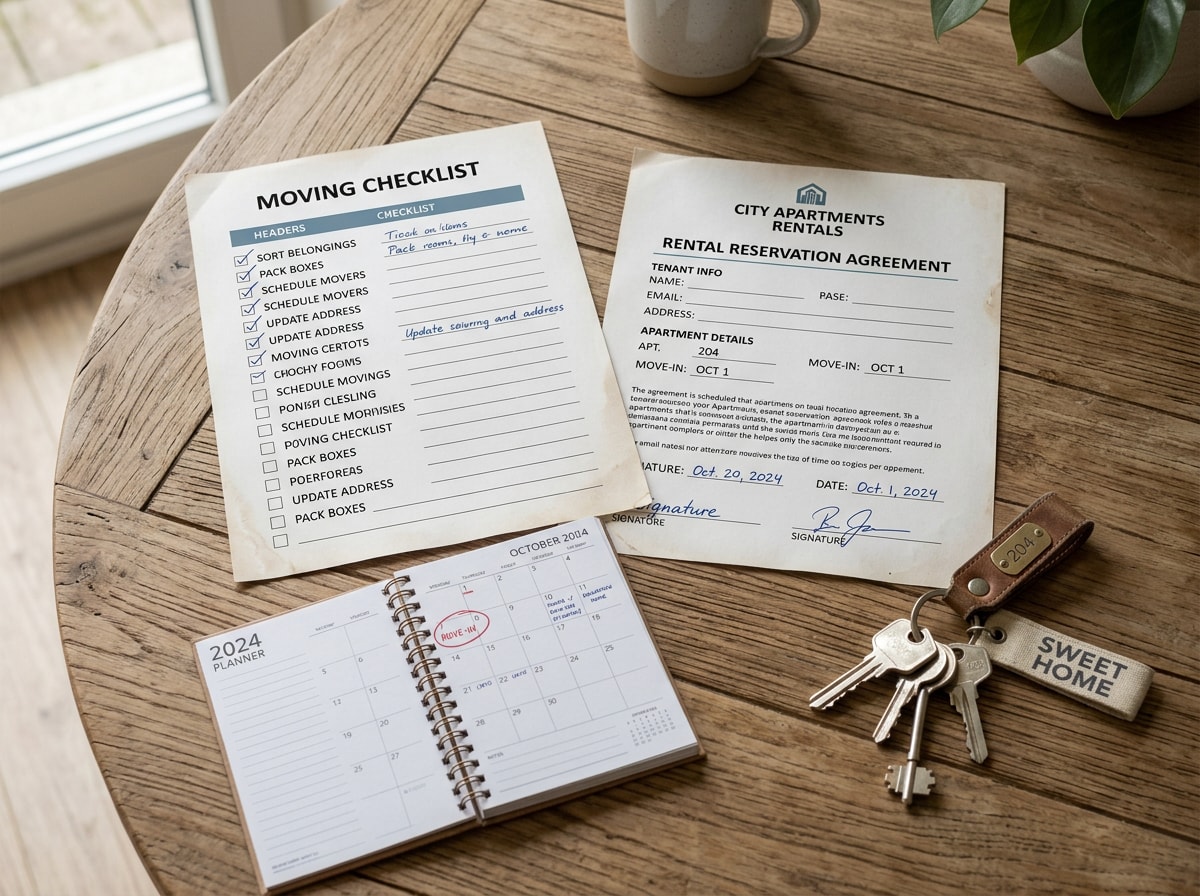
This question comes up constantly: you find the perfect unit, but your actual move-in date is still a month or two out. Asking a landlord to hold an apartment before you're ready can work, but it trades flexibility for cost. You may pay more upfront for the privilege of locking in a future move-in date.
The trade-off is usually worth it if the unit is genuinely hard to replace, like a rare floor plan, a great price, or a location that rarely opens up. If it's a fairly standard unit in a building with regular turnover, waiting and reapplying closer to your date may be the less expensive route.
Whichever way you lean, start the conversation as early as your moving plans are known. Early conversations give you more room to negotiate flexible terms than a last-minute request does.
Planning Your Plano Apartment Move Around the Hold Period
There's no universal rule for how long you can hold an apartment, only a rough baseline of one to two weeks, with longer holds requiring extra negotiation and often extra cost. The best way to plan ahead is to raise the hold question early, get every term in writing, and confirm the deposit's refund conditions before you pay anything.
Treat the hold agreement as seriously as the lease itself, since it's what protects you from rental surprises down the line. Once your move-in date and deposit terms are locked, the next step is lining up help for the actual move. Our apartment movers and apartment moving crews work around Plano leasing schedules regularly, including tight windows after a hold period ends. If you're still mapping out the rest of your timeline, our guide to moving to a new apartment in Plano, TX covers the planning steps that come after the lease is signed.
Ready to lock in your move date? Get a free estimate once your hold period and deposit terms are confirmed, and we'll build the move around your actual key date. You can also browse our full local moving options or see all the neighborhoods we serve around Plano, TX and the wider DFW area from our homepage.
FAQ
Do You Have to Pay a Holding Deposit?
It depends on the property. Some landlords ask every applicant to pay a holding deposit before reserving a unit; others will hold an apartment informally with no money down. Always ask upfront what the specific property expects before you agree to anything.
Why Does a Landlord Need a Holding Deposit?
A holding deposit compensates the landlord for the risk of turning away other interested renters while they reserve a unit for you. It also shows you're committed to moving forward rather than just browsing options.
Is a Holding Deposit Refundable?
It depends entirely on the written agreement you sign. If the landlord rejects your application through no fault of your own, you can typically get your deposit back. If you back out voluntarily or fail to meet agreed conditions, the deposit is often non-refundable.
How Far in Advance Can You Hold an Apartment Before Moving In Plano?
Most Plano leasing offices will hold a unit one to two weeks out from your move-in date without extra cost. Going further than that, 30 days or more, usually requires a signed reservation agreement and a larger deposit, and it's less likely to be approved on in-demand units.
What Happens if You Don't Move In After Paying a Holding Deposit?
If you back out after paying a deposit, most agreements let the landlord keep some or all of it to cover the time the unit was off the market. Check the written terms before you pay, since this is exactly the clause that causes disputes later.
Can a Landlord Charge Extra for a Longer Hold?
Yes. Many landlords will agree to extend a hold beyond the standard one to two weeks, but they'll often ask for a larger deposit or partial rent during the extension. This is negotiable, so ask before assuming the standard terms apply.